


Benefits of UPF 50 Golf Clothing
Table of Contents
- What UPF 50 Actually Means for Your Skin
- Why Sun Protection Matters During a Round of Golf
- The Real Benefits of UPF 50 Golf Clothing
- UPF Clothing for Hot Weather: Staying Cool While Covered
- Choosing the Best Sun Protection Clothing for Golf
- UPF Clothing Care and Lifespan: Making It Last
- Conclusion: Play Smart, Play Protected
- Frequently Asked Questions
Last Updated: October 14, 2026
What UPF 50 Actually Means for Your Skin
UPF 50 is the highest sun-protective rating a fabric can earn, and it's the number to look for when you want real coverage on the course. Here's the groovy part: it's not marketing fluff. Ultraviolet Protection Factor is a standardized measure of how much UV radiation passes through a fabric to your skin, and UPF 50 means only about 2 percent gets through. That's roughly 98 percent of UV rays blocked, which is a whole lot of shade without hiding under a cart cover.
At Hippie Golf LLC, we lean on UPF 50 because it lets you play free and easy while your shirt does the quiet work.
UPF vs. SPF: The Rating You Need to Know
UPF and SPF are cousins, not twins. SPF rates sunscreen and how long it shields you from UVB rays before you burn. UPF rates fabric and how much UVA and UVB radiation it blocks outright.
Sunscreen needs reapplying. A UPF 50 shirt keeps working as long as it's on your back.
How Much UV Radiation Does UPF 50 Block?
UPF 50 blocks about 98 percent of UV radiation, leaving roughly 2 percent of UV transmission through the fabric. Compare that to a plain white cotton tee, which may offer only a fraction of that protection depending on weave and stretch.
Why Sun Protection Matters During a Round of Golf
A round of golf is a long, slow bake. Eighteen holes can mean four-plus hours of sun exposure, often in the middle of the day when UV rays hit hardest. You're walking, standing, and swinging in full sun with your arms and neck exposed.
CDC guidance on sun exposure and skin cancer risk reminds us that UV exposure adds up over a lifetime, and unprotected skin damage raises skin cancer risk. Sunburn isn't the only worry; cumulative exposure is the sneaky one.
The Real Benefits of UPF 50 Golf Clothing
The core benefit of UPF 50 golf clothing is simple: it puts a reliable barrier between you and UV radiation without any reapplication. You get consistent sun protection, less sunscreen hassle, and coverage that stays put through sweat and swings.
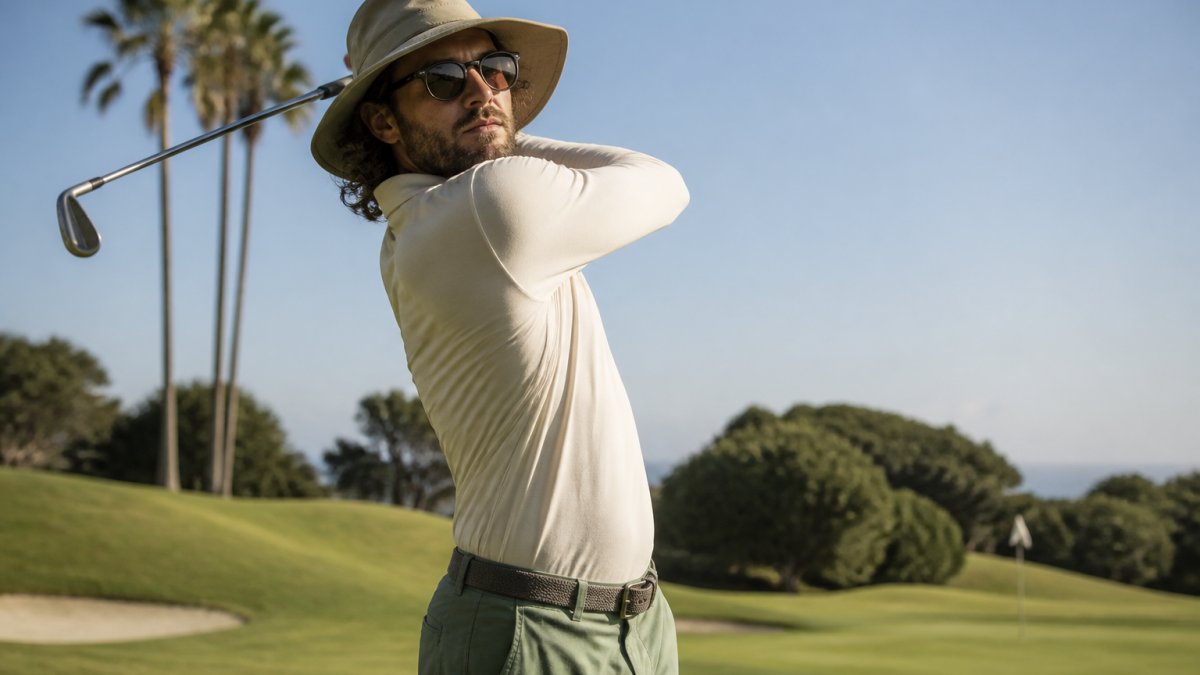
Beyond blocking rays, sun-protective clothing manages heat and moisture. Breathable, moisture-wicking fabric moves sweat away so you stay cooler and drier. That matters when you're chasing a personal best in July.
Coverage Where It Counts: Arms, Neck, and Shoulders
These are the spots golfers forget. A long-sleeved shirt covers your forearms and upper arms, where sun damage quietly accumulates. A wide-brim hat shields your neck, ears, and face.
Our Bunker Boonie Hat pairs a 3-inch brim with Omni-Shade UPF 50 protection and an Omni-Wick sweatband, so your neck and face get shade while you stay cool. That's coverage where it counts, no fuss.

UPF Clothing for Hot Weather: Staying Cool While Covered
The classic worry is that covering up means overheating. Fair concern, but the right UPF 50 gear can actually feel cooler than a bare cotton tee, because it's doing two jobs at once: blocking UV and managing moisture. The trick is knowing what to look for.
What Actually Keeps You Cool
- Tight weave, light weight. UV protection comes from how tightly the yarns are packed, not how thick the fabric is. A densely woven, featherlight polyester can block more UV than a heavy cotton tee while weighing a fraction as much.
- Moisture-wicking fibers. These pull sweat off your skin and spread it across the fabric surface so it evaporates fast. Dry skin plus moving air equals a cooler body. Cotton holds sweat and gets heavy, the opposite of what you want on the back nine.
- Ventilation where it counts. Look for mesh panels, back vents, or laser-cut perforations under the arms and across the back, the zones that trap the most heat.
- Loose, oversized cuts. Airflow matters. A relaxed fit lets breeze circulate between fabric and skin instead of sealing you in.
- Light colors. Pale tones reflect more solar heat than dark ones, which soak it up.
- UPF-rated fabric that stays cool when wet. Some fabrics lose protection when soaked; tightly woven synthetics generally hold their rating better. Worth checking the care tag.
Fit and Movement: The Forgotten Comfort Factor
A shirt that binds at the shoulders or rides up mid-swing isn't just annoying, it can pull the fabric taut, and tension can open the weave slightly and reduce effective coverage. You want room to turn through the ball without the fabric fighting you.
A few fit checks before you buy:
- Raise your arms overhead. Does the hem stay put, or does the shirt ride up and expose your lower back?
- Take a practice swing. Any pulling across the chest or shoulders?
- Check the sleeve length. Long sleeves should reach your wrists without bunching at the grip.
- Feel the fabric. If it clings when damp, it'll cling worse at hole 14.
A Note on Materials
Recycled polyester is a solid choice here, it's lightweight, wicks well, and gives post-consumer plastic a second life instead of a landfill sentence. Organic cotton blends can work in milder conditions, though they typically hold moisture longer than synthetics. If sustainability matters to you (and it should, man), look for garments made from recycled or responsibly sourced fibers, and check whether the brand lists any third-party certifications on the label.
Our Sunny Flower Button Shirt is built for exactly this kind of day: 100 percent recycled polyester, featherlight, moisture-wicking, and rated UPF 50, with an oversized unisex cut that lets the breeze do its thing while you do yours.
Sunny Flower Button Shirt | 100% Recycled Polyester | Moisture Wicking | UPF 50 →

Choosing the Best Sun Protection Clothing for Golf
The best sun protection clothing for golf balances coverage, comfort, and movement, so you forget you're wearing it. Start with the rating, then match the garment to the conditions.
Here's how we'd choose, step by step:
- Check the UPF rating first, and aim for UPF 50.
- Pick coverage for exposed zones: long sleeves for arms, a wide-brim hat for neck and face.
- Choose breathable, moisture-wicking fabric for hot weather.
- Test the fit: you want room to swing, not a sausage casing.
- Confirm care instructions so the protection lasts.
Stocking up on a few pieces is easier when you know shipping won't sting, we offer Free Shipping Over $75, so you can grab a shirt and a hat without watching the cart total like a hawk.
The rating is the starting line, not the finish. A UPF 50 shirt that fits badly or traps heat won't get worn, and protection you leave in the drawer protects nobody.
UPF Clothing Care and Lifespan: Making It Last
UPF clothing care and lifespan come down to how you wash and wear it. UV protection lives in the fabric's construction, so treat the garment kindly and it keeps blocking rays season after season.
A few habits that help:
- Wash in cold water and skip harsh bleach
- Air dry when you can, or tumble low
- Avoid stretching fabric tight, since tension can open the weave
- Retire pieces that are worn thin, faded, or stretched out
Many UPF garments are designed to soften with washing, which adds comfort without killing the protection. Still, no fabric lasts forever. When a shirt gets threadbare, it's time to pass it along and grab a fresh one.
Conclusion: Play Smart, Play Protected
The sun doesn't take a mulligan, and neither should your skin. UPF 50 golf clothing gives you steady, no-reapply protection so you can focus on your swing instead of your shoulders.
At Hippie Golf LLC, we build retro-inspired gear that works as hard as it looks good, from moisture-wicking button shirts to wide-brim boonie hats with UPF 50 and recycled materials. Dig the vibe, protect your skin, and keep it righteous out there.
Frequently Asked Questions
Is UPF 50 clothing worth it for golf?
Yes, especially for long rounds under direct sun. UPF 50 blocks about 98 percent of UV radiation, so it reduces exposure on covered areas like shoulders, arms, and the back of the neck. Unlike sunscreen, it does not need reapplying every two hours, and it keeps working while you swing. For golfers who play regularly, a UPF 50 shirt is a practical layer of sun safety that also handles sweat and movement.
What is the best UPF-rated clothing for golf?
Look for UPF 50, moisture-wicking fabric, and a fit that lets you rotate through your swing without restriction. Long sleeves and a collar add coverage. Breathable, lightweight materials help in hot weather. A wide-brim hat with UPF 50 protects your face and neck. The best choice is the one you will actually wear every round, so prioritize comfort and breathability alongside the rating.
How long does UPF 50 clothing last?
With proper care, UPF 50 clothing can maintain its protection for years. Wash it gently, avoid fabric softeners, and skip the dryer when possible. Fading, thinning, or stretched-out fabric are signs the UPF rating may have dropped. If the garment still looks and feels solid, it likely still protects well. Replace it when the fabric becomes see-through or worn in high-sun areas.
Do you still need sunscreen when wearing UPF 50 clothing?
Yes, for exposed skin. UPF 50 protects only the areas the fabric covers. Your face, ears, hands, and any gap between sleeve and glove still need sunscreen. Think of UPF clothing as your base layer of protection and sunscreen as the supplement for what is left uncovered. Together they reduce your overall UV exposure far more than either one alone.
Does UPF 50 clothing keep you cooler on the course?
It can help. Breathable, moisture-wicking UPF 50 fabric moves sweat away from your skin and blocks direct sun from hitting covered areas. That combination often feels cooler than bare skin baking in direct UV. Light colors and loose fits also help. The key is choosing fabric designed for hot weather rather than heavy, non-breathable material that traps heat.
How should you care for UPF 50 golf clothing?
Wash in cold water on a gentle cycle, use mild detergent, and avoid fabric softener and bleach. Skip the dryer or use low heat. The fabric softens over time, which improves comfort without hurting performance. Avoid harsh chemicals and rough surfaces that can break down fibers. Proper care keeps the fabric construction intact, which is what maintains the UV protection.
Ready to play smart and look far out doing it? Shop Hippie Golf LLC for UPF 50 apparel made with recycled materials, and enjoy free shipping on orders over $75. Your skin, and the planet, will thank you.
Sunny Flower Button Shirt | 100% Recycled Polyester | Moisture Wicking | UPF 50 →