


Does UPF 50 Golf Clothing Work? A Real Answer
Table of Contents
- Does UPF 50 Golf Clothing Actually Work?
- Understanding UPF Ratings and What Makes Clothing UPF Rated
- The Fabric Story: Why Weave, Color, and Construction Matter
- Best UPF-Rated Clothing for Golf: Performance Meets Style
- Does UPF Clothing Work When Wet or Stretched?
- How to Care for UPF Clothing to Keep It Working
- The Real-World Sun Protection Routine for Golfers
- Frequently Asked Questions
Last Updated: October 11, 2026
Does UPF 50 Golf Clothing Actually Work?
Here's the real talk: yes, UPF 50 golf clothing works. It genuinely blocks ultraviolet radiation and keeps your skin safer during long rounds under the sun. But "works" doesn't mean it's perfect or that you can ignore everything else about sun protection. The truth sits somewhere between the marketing hype and the skeptics who think it's all just expensive fabric.

The question isn't whether UPF 50 clothing works, it's how well it works in real conditions, what its actual limits are, and how to choose pieces that will last through seasons of play.
Let's break down what the science actually tells us, what happens when your shirt gets wet or stretched on the course, and how to build a sun-protection routine that actually sticks.
Understanding UPF Ratings and What Makes Clothing UPF Rated
UPF stands for Ultraviolet Protection Factor. It measures how effectively a fabric blocks ultraviolet radiation from reaching your skin. The higher the UPF number, the more UV rays the material stops.
Think of it like sunscreen, but for your clothes. Where SPF (sun protection factor) measures how long you can stay in the sun before burning, UPF measures how much UV radiation a fabric lets through. A UPF 50 shirt blocks 98% of ultraviolet rays. A UPF 50+ shirt blocks 99% or more.
Here's what makes clothing actually earn a UPF rating:
- Fabric construction, How tightly the fibers are woven together. Denser weaves block more rays.
- Fabric color, Darker colors absorb more UV energy than light colors. Black and navy work better than white or pale yellow.
- Fabric thickness, Heavier materials provide better protection than thin, sheer fabrics.
- Fiber type, Some materials naturally block UV better than others. Synthetic fibers like polyester often perform better than cotton.
- Chemical finishes, Manufacturers can add UV-absorbing coatings to boost protection.
To be labeled UPF 50, a garment must pass independent testing. The fabric gets exposed to controlled ultraviolet light, and testers measure how much radiation passes through. It's not marketing theater, it's actual lab work.
How UPF 50 Differs from SPF
SPF and UPF measure different things, which confuses a lot of people. SPF applies to sunscreen and measures time, how many minutes you can stay in the sun before your skin starts to burn.
UPF measures the percentage of UV radiation that gets blocked by fabric. UPF 50 blocks 98% of UV rays. That's it. It's a percentage, not a time measurement. You can wear UPF 50 clothing all day and still get some UV exposure, just much less than you would in a regular t-shirt.
The other key difference: SPF only measures UVB rays (the ones that cause sunburn). UPF measures both UVA and UVB rays. UVA rays don't burn as obviously, but they penetrate deeper and contribute to aging and skin damage. This makes UPF ratings more comprehensive for actual sun protection.
What UPF 50 Actually Blocks
A UPF 50 shirt blocks 98% of ultraviolet radiation. That sounds amazing, and it is, but let's talk about what that actually means on a golf course.
If 100 UV rays hit your shirt, only 2 get through to your skin. That's a huge difference compared to wearing a regular cotton t-shirt, which might let 50-80% of UV rays through depending on the weave and color.
But here's the catch: that 2% that gets through still adds up over time. A four-hour round in intense sun means your skin is still getting UV exposure. It's just dramatically less than it would be otherwise. Combined with sunscreen on exposed areas (face, neck, hands) and a wide-brim hat, UPF 50 clothing becomes part of a solid sun-protection system.
The protection also assumes the fabric is in perfect condition. Stretched fabric, wet fabric, or fabric that's faded from washing, these all affect how much UV gets through. More on that later.
The Fabric Story: Why Weave, Color, and Construction Matter
Not all UPF 50 fabrics are created equal. Two shirts can both have a UPF 50 rating and feel completely different on the course.
Weave density is the first factor. A tightly woven fabric leaves less space for UV rays to slip through.
Fabric thickness matters too. Heavier fabrics generally provide better UV protection than thin ones. A flimsy, lightweight shirt might technically be UPF 50, but it'll feel like wearing tissue paper in July.
Color plays a surprisingly big role. Dark colors absorb UV energy. Black, navy, and deep greens block more UV than white, pale yellow, or light gray.
Fiber type affects protection too. Synthetic fibers like polyester block UV better than natural fibers like cotton.
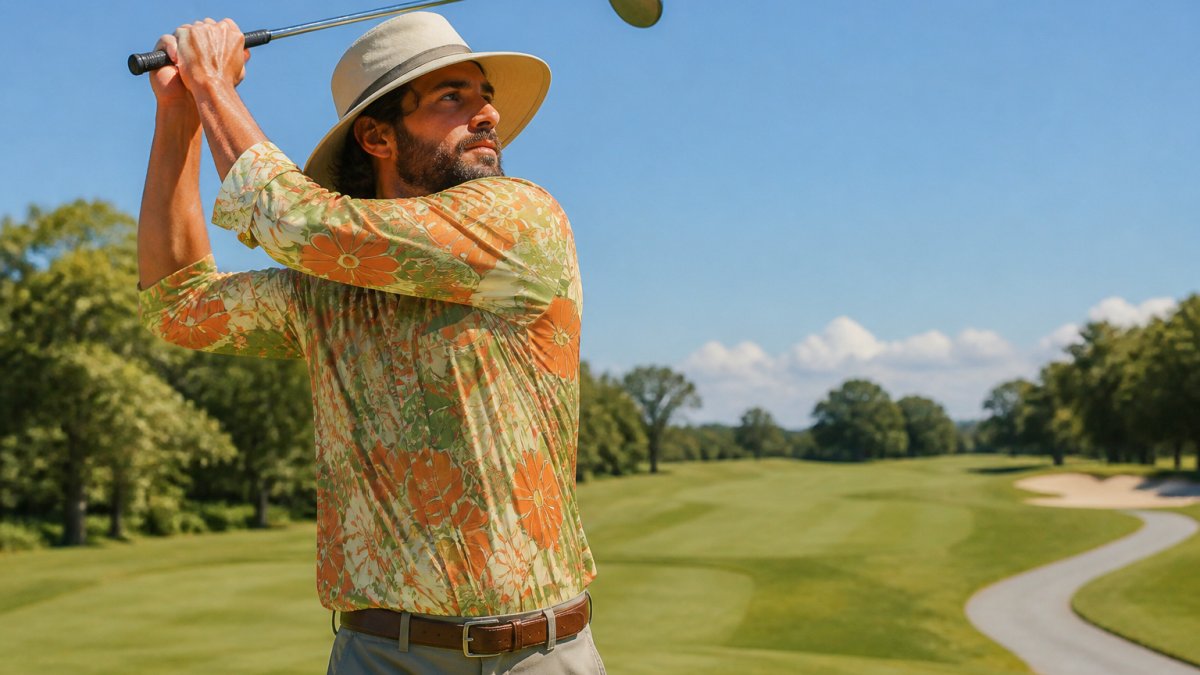
At Hippie Golf LLC, our UPF 50 pieces like the Sunny Flower Button Shirt use 100% recycled polyester, which gives you both strong UV protection and a lower environmental footprint.
Best UPF-Rated Clothing for Golf: Performance Meets Style
The best UPF-rated clothing for golf combines protection with comfort and style that actually makes you want to wear it. Here's what to look for:
Start with a solid UPF 50 button shirt. These work as your base layer on sunny days. Look for:

- Moisture-wicking fabric (keeps sweat from sitting on your skin)
- Breathable construction (lets air flow through)
- A fit that allows movement (you're swinging, not sitting)
- A collar to protect your neck
The Abstract Button Shirt delivers all of this with a bold retro print that doesn't look like typical golf wear.
Add a wide-brim hat to cover your face, scalp, and neck. The Bunker Boonie Hat has a 3-inch brim, Omni-Shade UPF 50 protection, and a moisture-management sweatband.
Sunny Flower Button Shirt | 100% Recycled Polyester | Moisture Wicking | UPF 50 →
Consider long sleeves or arm sleeves. Full sleeves give you maximum coverage but can feel hot. Some golfers prefer sleeveless shirts with separate arm sleeves, you get protection where you need it and more airflow elsewhere.
Pair everything with sunscreen on exposed skin (face, ears, hands, tops of feet). UPF clothing covers a lot, but it doesn't cover everything. The combination approach is what actually works.
Does UPF Clothing Work When Wet or Stretched?
This is where real-world conditions get messy. Your UPF 50 shirt performs great in the lab. But what happens when you're sweating through it, or the fabric gets stretched across your shoulders?
When fabric gets wet, UV protection drops. Water fills the gaps in the weave, and UV rays travel through water differently than through air. A wet UPF 50 shirt might only provide UPF 20-30 protection, still better than nothing, but significantly less than when it's dry.
When fabric gets stretched, the weave opens up. Pull a UPF 50 shirt tight and you're literally creating larger gaps for UV rays to pass through. This is why fit matters. A shirt that's too tight will lose some protection.
The takeaway: UPF clothing works well in ideal conditions. In real golf conditions, heat, sweat, movement, it still works, but the protection is somewhat reduced. This is why layering protection (UPF clothing plus sunscreen plus a hat) makes sense. You're not relying on one method alone.
How to Care for UPF Clothing to Keep It Working
Here's something most guides skip: UPF protection doesn't last forever. It degrades with washing and sun exposure.
Wash in cold water to preserve the fabric and any UV-blocking finishes. Hot water can break down synthetic fibers and damage protective coatings.
Skip the dryer when possible. Heat damages both the fabric and any chemical UV treatments. Air dry your UPF gear to extend its life.
Don't bleach or use harsh detergents. These break down fibers and remove protective coatings. Use mild detergent and skip the bleach entirely.
Expect the protection to fade. After 20-40 washes, UPF protection typically starts to decline.
Sun exposure also degrades protection. Ironically, wearing your UPF shirt in the sun breaks down the protective properties. This is why storing gear out of direct sunlight helps.
The fabric itself lasts longer than the UPF rating. Your shirt won't fall apart after a season. But if maximum protection is your goal, plan to replace heavily-used pieces every 1-2 years.
The Real-World Sun Protection Routine for Golfers
UPF 50 golf clothing is one piece of a solid sun-protection strategy. Here's how to actually protect yourself on the course:
Before you head out:
- Apply broad-spectrum sunscreen (SPF 30+) to face, ears, neck, and the tops of your feet. Don't skip the ears, they burn easily and are easy to forget.
- Wear your UPF 50 shirt. Layer it if needed. A button shirt over a moisture-wicking base layer gives you extra protection and better moisture management.
- Put on your wide-brim hat. Three inches of brim is the minimum. More is better.
During your round:

- Reapply sunscreen every 2 hours or after you've sweated heavily (the American Academy of Dermatology). This is the part most golfers skip, and it's crucial.
- Seek shade during breaks. Sit under a tree at the turn instead of in the cart with no cover.
- Stay hydrated. Dehydration makes your skin more vulnerable to UV damage.
- Check your clothing. If your shirt is soaked, consider changing into a dry one if you're out for a long round.
After your round:
- Wash your UPF gear in cold water with mild detergent. Air dry it.
- Apply moisturizer to your face and exposed skin. Sun exposure dries skin out, even when you're protected.
- Check yourself for any unusual spots or changes. Early detection of skin issues matters.
This routine sounds like a lot, but it becomes automatic after a few rounds. The goal isn't perfection, it's consistency. A golfer who wears UPF 50 clothing, a hat, and sunscreen every time they play is dramatically better protected than someone who relies on any single method.
The bottom line: UPF 50 golf clothing absolutely works. It blocks 98% of ultraviolet radiation and is a proven way to reduce skin damage from sun exposure. But it's not a silver bullet. Combine it with a wide-brim hat, sunscreen on exposed areas, and smart sun habits, and you've built real protection that lasts through a full round.
At Hippie Golf LLC, we design UPF 50 pieces that actually feel good to wear. Our Albatross Argyle Button Shirt and other styles use recycled polyester, so you're protecting yourself and the planet at the same time. Play with purpose, stay protected, and enjoy the course. Shop our UPF 50 collection with free shipping over $75.
Frequently Asked Questions
What does UPF 50 mean, and does it really block all UV rays?
UPF 50 blocks approximately 98% of ultraviolet radiation, allowing only about 2% to pass through the fabric. The '50' refers to the ratio of UV exposure without protection versus with the fabric. While it doesn't block 100% of rays, UPF 50 provides excellent protection for extended sun exposure on the golf course. Pairing UPF 50 clothing with other protection methods, like a wide-brim hat and sunscreen on exposed skin, creates a comprehensive defense against UV damage.
Does UPF clothing still work when wet or stretched?
UPF protection can diminish when fabric is wet or stretched. Water in the fibers reduces the fabric's ability to block UV rays, and stretching thins the material, allowing more radiation through. However, quality UPF garments maintain reasonable protection even when damp or slightly stretched. To maximize protection during a round, allow wet fabric to dry when possible, and avoid excessive stretching. This is why proper fit and care matter, a well-maintained UPF 50 shirt performs better throughout your 18 holes.
What makes clothing UPF rated, and how is it certified?
Clothing receives a UPF rating through independent laboratory testing that measures how much ultraviolet radiation passes through the fabric. Factors include fabric weave density, fiber composition, color, and thickness. Certified ratings come from organizations like ASTM International, which sets the standards for UPF testing in the United States. Look for labels indicating OEKO-TEX or GRS certification, these verify that the materials and manufacturing meet strict environmental and safety standards.
How should I care for UPF golf clothing to keep it working?
Wash UPF garments in cool water with mild detergent and avoid fabric softeners, which can clog fibers and reduce UV-blocking ability. Air-dry when possible, heat from the dryer can degrade the protective finish over time. Avoid excessive bleach or harsh chemicals. Many quality UPF fabrics, especially those made from recycled polyester, actually soften and become more comfortable after washing while maintaining their protection. Proper care extends the lifespan of your gear and keeps that sun protection reliable for many rounds to come.
Sunny Flower Button Shirt | 100% Recycled Polyester | Moisture Wicking | UPF 50 →