


Eco Friendly Golf Shirt Brands: 2026 Sustainable Guide
Table of Contents
- What Makes a Golf Shirt Brand Truly Eco Friendly
- Sustainability Snapshot: How Leading Eco Friendly Golf Shirt Brands Compare
- Why Recycled Polyester Golf Shirts Match Traditional Performance
- Natural Fibers vs. Synthetic Alternatives: Merino, Bamboo, and Beyond
- Sustainable Golf Apparel: Certifications That Separate Real Claims From Greenwashing
- How to Build a Sustainable Golf Wardrobe That Lasts
- Frequently Asked Questions
Last Updated: September 29, 2026
What Makes a Golf Shirt Brand Truly Eco Friendly
An eco friendly golf shirt brand is one whose environmental claims hold up under scrutiny, the fabric, the certifications behind it, and the supply chain that produced it. This guide from Hippie Golf LLC breaks down how to tell real sustainability from a good story.
Fabric, Certifications, and Supply Chain Transparency
A genuinely eco friendly golf shirt brand can show you three things: what the shirt is made of, who certified it, and where it was assembled. Brands that can't answer all three rely on vibes rather than verification.
Sustainability Snapshot: How Leading Eco Friendly Golf Shirt Brands Compare
The table below summarizes how eco friendly golf shirt brands differ across the criteria that matter most. Use it as a quick screening tool.
| What to Check | Strong Signal | Weak Signal |
|---|---|---|
| Fiber content | Named recycled or natural fiber | "Eco blend" with no detail |
| Certification | Third-party verified | Self-declared only |
| Supply chain | Factory partners disclosed | No information shared |
| Care guidance | Wash and recycle instructions included | Nothing beyond the tag |
| Longevity claims | Reinforced stitching, tested fabric | Trend-driven, thin construction |
Why Recycled Polyester Golf Shirts Match Traditional Performance
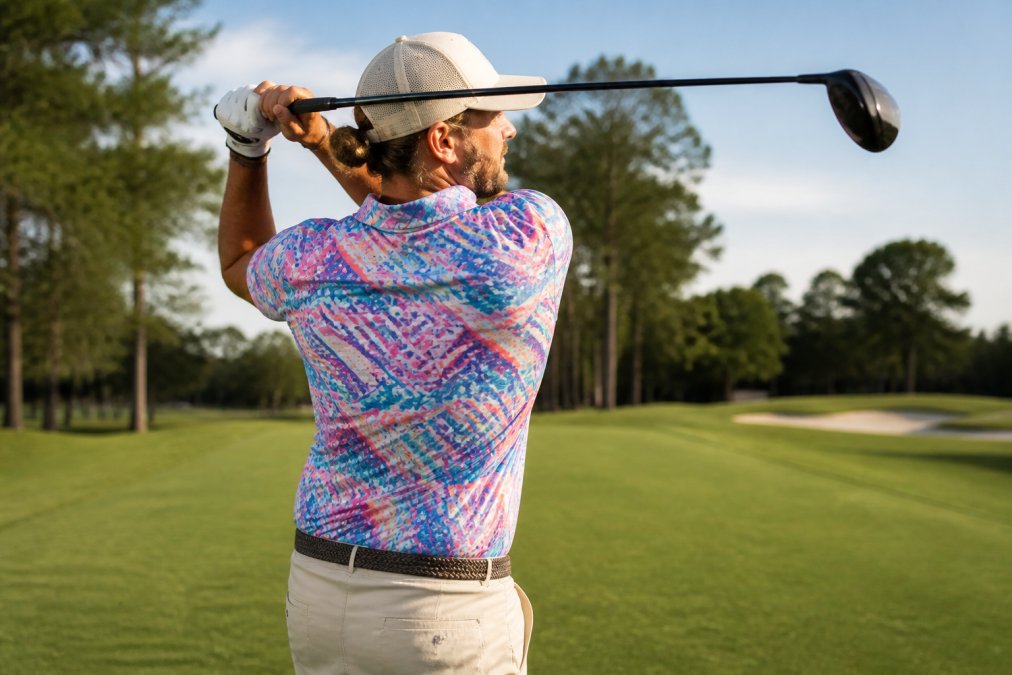
Recycled polyester golf shirts perform nearly identically to virgin polyester on the course. The fiber is chemically the same, so moisture-wicking, stretch, and durability carry over. The difference is upstream: recycled polyester is typically made from post-consumer plastic like water bottles, keeping material in circulation instead of sending it to landfill.
Moisture-Wicking, Breathability, and Odor Resistance
Performance comes down to fabric construction, not fiber origin. A recycled polyester knit with a good moisture management finish wicks sweat and dries fast; a looser knit or mesh panels add airflow where it counts.
Natural Fibers vs. Synthetic Alternatives: Merino, Bamboo, and Beyond
Natural fibers and synthetics each win in different conditions, and the right pick depends on when you play, how much you sweat, and how you'll dispose of the shirt. The trade-offs go deeper than "natural is greener."
How Each Fiber Actually Performs
- Merino wool: Its crimped structure traps air for insulation and regulates temperature across a wide range, and its surface chemistry inhibits odor-causing bacteria. It's slower to dry and costs more, but can be worn multiple rounds between washes, cutting laundry and shedding.
- Bamboo viscose: Most bamboo apparel is viscose, a regenerated cellulose fiber, not raw bamboo. It feels soft and breathes well, but loses strength when wet and stretches faster than synthetics, so it's often blended for structure. Conventional viscose processing is chemical-intensive; look for lyocell or closed-loop processes if that matters to you.
- Recycled polyester: Fast-drying, durable, and moisture-wicking, made from diverted plastic waste, and chemically identical to virgin polyester. The trade-off is shedding: synthetic knits release microfibers in the wash.
- Organic cotton: Comfortable for casual wear, but heavy when wet and slow to dry on the course. It's a poor fit for hot, humid rounds where sweat management matters.
The Microplastic Trade-Off Nobody Mentions
This is the part most "eco-friendly golf shirt" guides skip. Recycled polyester keeps plastic out of landfill upstream, but every wash releases microfibers, tiny plastic particles that pass through wastewater treatment and end up in waterways. A study on microfiber pollution from synthetic textiles found that washing conditions strongly influence how many fibers a garment releases, with mechanical agitation, temperature, and detergent all playing a role.
Matching the Fiber to the Round and the End of Life
For most golfers building a playing wardrobe, a mix works best:
- Hot, humid summer rounds: recycled polyester, for fast drying and sweat management
- Cooler shoulder seasons: merino, for temperature regulation and odor resistance across multiple wears
- Casual wear and the 19th hole: organic cotton or a bamboo blend, where breathability matters more than sweat management
Sustainable Golf Apparel: Certifications That Separate Real Claims From Greenwashing
Certifications are the fastest way to verify a sustainability claim, but only if you know what each one covers. A logo means nothing until you understand who issued it, what they audited, and whether the claim applies to the finished shirt or just the raw fiber. Most shoppers never check, which is why brands lean on vague language.
What Each Certification Actually Covers
- Global Recycled Standard (GRS): Verifies the percentage of recycled content and traces it through the supply chain, issued through third-party bodies accredited by Textile Exchange. A shirt labeled "recycled" without GRS may still contain recycled fiber, but the percentage and chain of custody are unverified.
- OEKO-TEX Standard 100: Tests the finished fabric for harmful substances, things like certain azo dyes, formaldehyde, and heavy metals, against published limit values. It says nothing about recycled content or worker conditions. It's a safety and chemistry standard, not a sustainability score.
- Bluesign: Audits the entire production process, input chemicals, water and energy use, emissions, and worker safety, at the mill and factory level. Broader than OEKO-TEX because it looks at how the fabric was made, not just what's in it.
- Fair Trade Certified: Focuses on worker conditions and wages in the supply chain, with a premium paid back to workers. It does not verify fiber content or fabric chemistry.
- B Corp: Evaluates a company's overall social and environmental performance, governance, and transparency. It's a company-level score, not a product-level claim, a B Corp can still sell a shirt with no recycled content.
A brand doesn't need all five. One legitimate certification that matches the claim being made beats five vague promises. The key is matching the mark to the claim: if a brand says "made from recycled bottles," look for GRS, not B Corp.
How to Verify a Certification Yourself
The certification number is the part most shoppers never use. Every legitimate third-party mark carries a license or certificate number, and most issuing bodies publish a searchable database to confirm the brand is certified and what scope the certificate covers.
A practical verification routine:
- Find the certification number on the hangtag, label, or brand website
- Look up that number in the issuing body's public database
- Confirm the certificate is current and covers the specific product or facility
- Check that the certified scope matches the claim (recycled content vs. fabric safety vs. worker conditions)
A "100% sustainable" claim with no certification is a red flag. If the brand can't name its certifying body or provide a certificate number, treat the claim as unverified until they can. The Federal Trade Commission's Green Guides set the legal standard for how environmental marketing claims can be made, and vague, unqualified claims can run afoul of it.
Where Certifications Still Fall Short
Certifications verify specific claims, they don't measure a shirt's total environmental footprint. A GRS-certified recycled polyester polo still sheds microfibers in the wash. An OEKO-TEX-certified fabric can still be produced in a factory with high energy use. Treat certifications as verified facts about specific attributes, not as a complete sustainability grade. The Textile Exchange's certification resources explain the scope of each standard in more detail, which helps when a brand's website is light on specifics.
How to Build a Sustainable Golf Wardrobe That Lasts
Building a sustainable golf wardrobe is about buying fewer, better pieces and keeping them in play longer. Longevity is the most underrated sustainability strategy in apparel: a shirt worn for five seasons has a far smaller footprint per round than one replaced every year.
Care, Recycling, and Microplastic Shedding
Care habits determine how long a shirt lasts and how much it sheds. Every wash of a synthetic garment releases microfibers, and those particles are a growing concern for waterways. A study on microfiber pollution from synthetic textiles found that washing conditions strongly influence how many fibers a garment releases.
Three habits cut shedding and extend garment life:
- Wash less often, and only when the shirt is genuinely dirty
- Use a microfiber-catching wash bag for synthetic pieces
- Air dry instead of machine drying to reduce fiber breakdown
Frequently Asked Questions
What materials are used in eco-friendly golf shirts?
Most eco friendly golf shirt brands build their fabrics from recycled polyester (often from recycled water bottles), bamboo viscose, merino wool, or bio-based fabrics. Recycled polyester dominates because it delivers moisture-wicking, four-way stretch, and odor resistance while keeping plastic out of landfills. Bamboo viscose adds softness and temperature regulation, while merino wool offers natural breathability. Look for shirts that name the fiber and its source on the label, since vague terms like 'eco blend' tell you nothing about actual content.
Are sustainable golf shirts as durable as traditional synthetic options?
Yes, when the fabric is made well. Recycled polyester golf shirts hold up to repeated washing and UV exposure just like virgin polyester, because the fiber structure is chemically identical. The difference is upstream: recycled content reduces greenhouse gas emissions and textile waste without sacrificing garment longevity. Durability depends more on fabric weight, knit construction, and how you care for the shirt. Washing cold, air drying, and avoiding fabric softener will extend any performance polo's life by years.
How can I tell if a golf clothing brand is truly sustainable?
Check for third-party certification rather than marketing language. Recognized programs include Global Recycled Standard (GRS), bluesign, OEKO-TEX, and Fair Trade Certified, each of which verifies specific claims about recycled content, chemical safety, or ethical manufacturing. A legitimate brand will publish certification details, name its suppliers, and explain its supply chain transparency. If a brand claims sustainability but cannot point to a certifying body or specific material sourcing, treat the claim as unverified greenwashing until proven otherwise.
Are bamboo golf shirts better than recycled polyester?
They solve different problems. Bamboo viscose is soft, breathable, and temperature-regulating, which suits cooler rounds or casual wear. Recycled polyester golf shirts excel at moisture management, odor resistance, and four-way stretch, making them better for hot, humid days and athletic swings. Many eco-conscious golfers keep both in rotation. The most sustainable choice is whichever shirt you will actually wear for years, since garment longevity has a bigger environmental impact than the fiber choice alone.